
— And I’ve Regretted It Ever Since
On good taste, bad decisions and the peculiar business of letting other people tell us what we like.
I was gutted when IKEA made me chuck out my chintz in the 90s.
Well, not personally. Nobody from IKEA turned up at my house with a skip.
But I fell for it. Hook, line and flowery curtain.
It was 1996, and IKEA launched its now-famous Chuck Out Your Chintz campaign. Out went the floral curtains, patterned sofas and all those perfectly serviceable bits and pieces that had made British homes look like British homes.
In came pale wood, clean lines and the promise of a brighter, more sophisticated existence.
And we swallowed it.
I certainly did.
Almost immediately, I regretted it.
Not because there’s anything wrong with Scandinavian design. There’s some beautiful stuff about. But because I’d allowed somebody else to convince me that something I genuinely liked was suddenly dreadful.
And thirty years later, I find myself wondering whether we’ve learnt a thing.
Look around. We’ve never had so much inspiration available to us. Interior magazines, television makeovers, Instagram, Pinterest. An endless parade of beautifully coordinated rooms telling us how our homes ought to look.
And yet, somehow, an awful lot of them are beginning to look the same.
Everything carefully considered. Everything matching. Nothing terribly unexpected.
I’m not against beautiful interiors. Far from it. But I do wonder when we became so frightened of getting it wrong.
When did we decide that our own judgement wasn’t quite up to the job?
I’ve watched perfectly intelligent, independent-minded people embrace the latest interiors trend as though they’d been handed instructions from on high.
Last year’s must-have colour becomes this year’s decorating disaster.
The furniture that was terribly chic five minutes ago is suddenly making us look dated.
And off we go again.
It’s an expensive business, this keeping up with other people’s opinions.
I love houses that tell me something about the people who live in them.
The painting somebody bought on holiday because it made them laugh. The slightly battered chair nobody can bear to part with. The odd collection of things acquired over a lifetime.
Things that don’t necessarily match but somehow belong together.
A house with a bit of character. A bit of cheek. Perhaps even the occasional dodgy decision.
After all, there’s something reassuring about knowing the people who live there haven’t spent their lives trying to impress a stranger on telly.
Of course, I’m not suggesting we all return to heavily patterned wallpaper and matching floral three-piece suites.
Unless you want to.
In which case, fill your boots.
And before every interior designer in the country throws a cushion at me, I should say that I have enormous respect for a good one.
The best designers don’t simply impose a fashionable look. They have the imagination and expertise to help people discover what suits them.
They can take all those apparently mismatched things you love and make them work together in ways you might never have imagined.
That’s a skill not to be sniffed at.
There’s a world of difference between helping someone express their individuality and persuading them to abandon it.
Good design should make room for personality, not iron it out.
I’ve always been drawn to people and places with character.
The awkward ones. The funny ones. The ones with a story that doesn’t fit neatly into anybody else’s idea of how things ought to be.
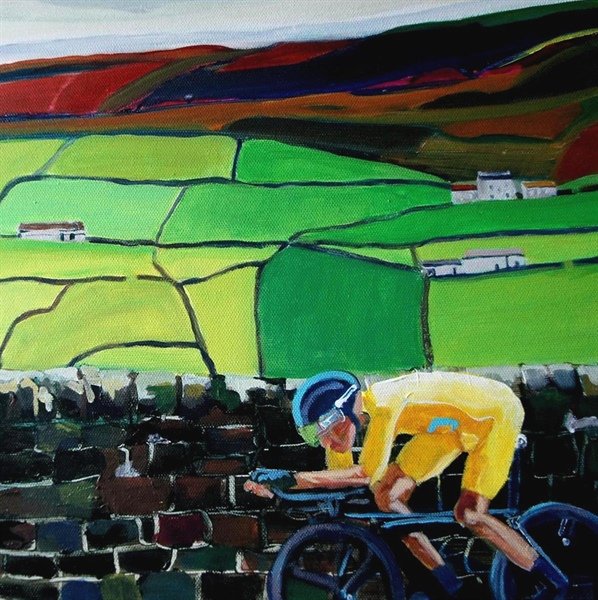
The ordinary lives, rural communities and gloriously complicated characters that find their way into my paintings.
I don’t paint them because they’re fashionable.
I paint them because they interest me. Because they make me laugh, make me think, or occasionally catch me off guard.
And I rather like the idea of somebody taking one of those paintings home simply because it speaks to them.
Not because it matches the sofa.
Not because an expert has declared it a sound investment.
And certainly not because it’s this season’s fashionable thing to hang above the fireplace.
But because they looked at it and thought, I love that.
Surely that’s reason enough?
IKEA’s campaign was brilliant advertising. I’ll give them that. (Hey IKEA my stripey wool rug bought on your opening day in Gateshead Thursday 2nd July 1992, is still going strong and I still love it!)
In 1996 they persuaded a nation to look at its own living rooms and question whether everything in them was hopelessly old-fashioned.
Quite a feat for a furniture shop.
But I do wish I’d questioned the question.
Because there’s nothing wrong with changing your mind, discovering new things or developing your taste.
The trouble starts when we stop asking ourselves what we actually like and start worrying about what everybody else thinks we ought to like.
Our homes should reflect the lives we’ve lived, the things we’ve loved and the people we’ve become.
Not simply the latest instructions from a television makeover programme.
So here’s my small act of rebellion, thirty years after the great chintz purge.
Keep the peculiar painting. Hang the odd picture. Treasure the battered chair. Mix things up. Make a few mistakes.
And if you genuinely love a bit of chintz, for heaven’s sake, keep it.
It’s your house. You’ve got to live in it.
And I don’t know about you, but I’m getting a bit old to be told what I like.
— Sue Dewhurst
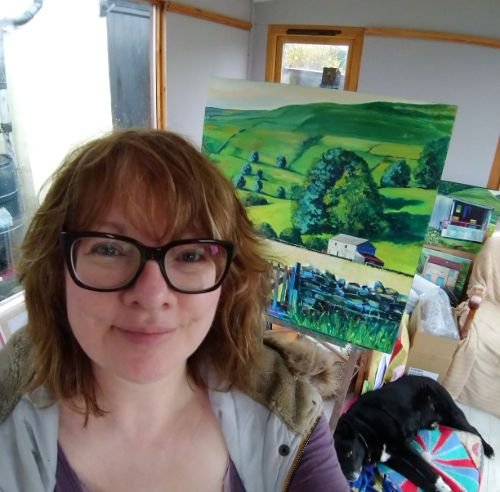
I paint people, places and the stories that make them worth remembering. You can explore my original paintings and prints here at suedewhurst.co.uk.
The featured image, Reluctant Protégé, felt fitting somehow — me as a child, already marinating in florals, pattern and the peculiar business of inherited taste.
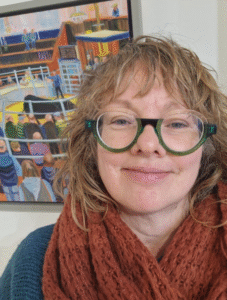
Sue Dewhurst is a UK-based contemporary artist specialising in characterful “Owd Lasses” paintings and vibrant rural and coastal scenes inspired by the Yorkshire Dales and West Wales. Her work captures working-class humour, nostalgia, and the grit of everyday life, from bingo halls to windswept farmland. Sue creates original paintings, limited edition prints, and bespoke commissions, collecting stories as much as she paints them. Her artwork is collected by those who value wit, heritage, and connection to place. Explore available work or commission your own Owd Lass at suedewhurst.co.uk.
My studio is open by appointment, offering a relaxed chance to see the work up close, talk through ideas, and spend time with the paintings in the space they’re made. Visitors are welcome to browse finished pieces, view works in progress, and ask questions — no pressure, no white gloves, just an honest look at the process behind the work. If you’re considering a particular painting or commission, a studio visit allows time to connect with the story, the colour, the humour and the detail that doesn’t always come through on a screen. Expect conversation, a cuppa, might stretch to a custard cream and a bit of a gossip but always a very warm welcome.
Studio visits are designed to feel comfortable and welcoming — especially if you’ve never visited an artist’s studio before.
Access to the studio involves steps or a sloping path. If you have any mobility concerns, please mention them when enquiring so we can discuss the best way to reach the studio.

Its FREE plus you receive exclusive offers, early access to collections and competitions